What Is SEO ?
The technique of making your website more visible in search engine results pages (SERPs) for particular keywords or queries is known as SEO (Search Engine Optimization).
When someone searches for “freelance SEO expert near me” or “best digital marketing services in Kerala,” Google looks through millions of sites and shows the most relevant ones first.
Your website is more likely to show up on the first page, where 75% of clicks occur, if it is properly optimized.
Since you don’t pay Google to display your page, SEO focuses on organic (non-paid) traffic. Instead, by providing worthwhile, reputable, and optimized material, you are gaining attention.
The Importance of SEO
Long-term growth = organic traffic: When your website ranks highly, it draws regular visitors.
Credibility and trust: People have faith in Google’s top results.
High ROI: Compared to bought advertisements, SEO offers compounding profits.
Improved user experience: SEO promotes mobile optimization, fast websites, and high-quality content.
To put it briefly, SEO makes it easier for people to find, click on, and use your website.
The 3 SEO Pillars
Technical SEO, On-Page SEO, and Off-Page SEO are the three main foundations of effective SEO. Each has a different purpose, but taken as a whole, they determine your internet presence.
1.Technical SEO: Establishing the Base
Technical SEO guarantees the crawlability, indexability, and speed of your website.
No matter how fantastic your content is, it won’t rank if Google’s bots are unable to effectively comprehend your website.
Key components of technical SEO:
• Website Speed: It should take less than three seconds for your website to load. Make use of resources such as GTmetrix or Google PageSpeed Insights.
• Mobile-Friendliness: More than 60% of searches take place on mobile devices. Make use of responsive design.
• Google gives priority to secure (HTTPS) websites.
• Crawlability: Ensure that your website is easily navigable by bots. Make use of robots.txt and XML sitemaps.
• Search engines can better comprehend your information (such as product prices and reviews) with the aid of structured data (schema).
• Resolving Errors: Fix redirects, broken links, and 404 pages.
Even the best-written content may not reach your audience if you don’t have good technical SEO.
2.On-Page SEO: Content Optimization
Optimizing individual pages of your website to target particular keywords and offer consumers useful content is known as on-page SEO.
Important features:
Find out what your audience looks for by conducting keyword research.
For instance, “best SEO services in Kerala” and “digital marketing expert in Malappuram.”
Create click-worthy titles with lots of keywords in your title tags and meta descriptions.
Headings (H1, H2, H3): Arrange your information rationally.
Optimizing content:
Naturally, use your primary keyword 1-2 times every 100 words.
Add LSI (Latent Semantic Indexing) keywords and synonyms.
Make sure everything is readable, including brief phrases, bullet points, and images.
Internal Linking: To increase link equity, connect to relevant pages.
Optimize images by adding alt tags and file names that are descriptive.
Example:
Use modifications such as these if your article is titled “How to Grow a Business Using Facebook Ads.”
Facebook advertising for small businesses
Advertising strategy on social media
Tips for paid promotions
This lets Google know that your material is thorough and important.
3.Off-Page SEO: Building Authority
Off-page Your online reputation and trustworthiness are enhanced via SEO. It informs Google that your content is trusted and referenced by other websites.
Principal factors:
• The most effective ranking component is backlinks. A “vote of confidence” is provided by a link from a reliable website, such as HubSpot or Forbes.
• Social Media Signals: Mentions and shares increase the visibility of material.
• Brand Mentions: Mentions enhance authority even in the absence of a link.
• Writing on other platforms increases exposure and backlinks through guest posting.
Expert advice: Prioritize quality over quantity. Ten excellent backlinks from prominent figures in the field are more effective than 100 random ones.
The Differences and Similarities Between Paid and Organic Search
The goal of both organic and sponsored search is to increase website traffic, but they operate in different ways.
| Feature | Paid Search (PPC) | Organic Search (SEO) |
|---|---|---|
Cost | Pay per click (Google Ads) | Free (time investment) |
Results Speed | Immediate | Gradual (3–6 months) |
Longevity | Stops when ads stop | Long-term visibility |
Goal | Quick conversions | Sustainable traffic |
Similarity: Both require data analysis, relevancy, and keyword optimization.
Smart marketers utilize both: paid ads for quick results and SEO for long-term success.
How Do Search Engines Work?
Search engines like Google, Bing, and Yahoo use a complex three-step process:
1- Crawling: Automated bots, sometimes known as spiders, locate new and updated webpages.
2- Indexing: The crawled pages are examined and stored by Google’s massive database.
3- Ranking: The algorithm ranks the pages based on user experience, authority, and relevancy when a user executes a search.
Fun fact: Google takes into account over 200 ranking factors, including backlinks, website speed, content quality, and engagement metrics.
How Are Search Results Ranked and Ordered by Google (and How to Optimize for RankBrain)?
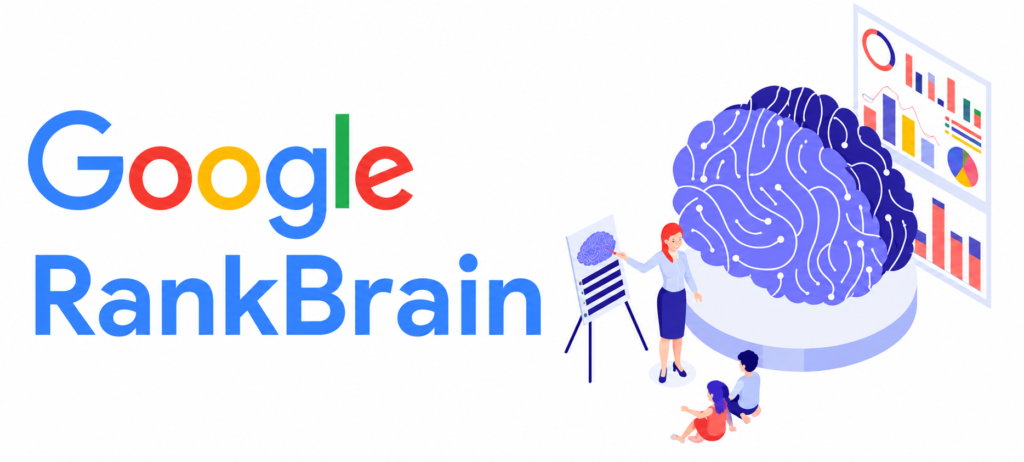
Google’s RankBrain is a machine-learning tool that aids in understanding search intent.In addition to keywords, it looks at how well your page satisfies the searcher’s needs.
RankBrain metrics:
1- Click-through rate, or CTR
2- Dwell time, or how long a user stays
3- Bounce rate (the rate at which users leave)
4- Content Relevance
What Is an SEO Strategy?
An SEO strategy is a systematic way to increase your website’s organic visibility, authority, and traffic.
An effective strategy should include:
Lorem ipsum dolor sit amet, consectetur adipiscing elit. Ut elit tellus, luctus nec ullamcorper mattis, pulvinar dapibus leo.
1. Define your goal: Do you want to improve visitors, leads, or sales?
2. Find out what your target audience is searching for by conducting keyword research.
3. Content Plan: When writing blogs, websites, and landing pages, pay attention to those keywords.
4. Technical Optimization: Ensure the site’s health, performance, and structure.
5. Reaching out to relevant websites to ask for mentions is part of building backlinks.
6. Tracking and Reporting: Analyze your performance using Google Analytics and Search Console.
A successful SEO campaign combines technical precision, unique content, and audience understanding.
This blog gives insights from a Kerala-based digital marketing expert who helps businesses improve their online presence, SEO performance, and digital growth. The content focuses on helpful strategies for social media marketing, content marketing, and search engine optimization to help businesses grow in the competitive digital marketplace.